

If you’ve ever been called “opinionated,” it probably wasn’t a compliment. Opinions, we laugh, are like assholes: everyone has one. Inherited from our families, absorbed from our environment, or learned from hard-won experience, we all have ideas about how the world should be. But while your bum is tucked away in your trousers, your opinions leak into the world around you.
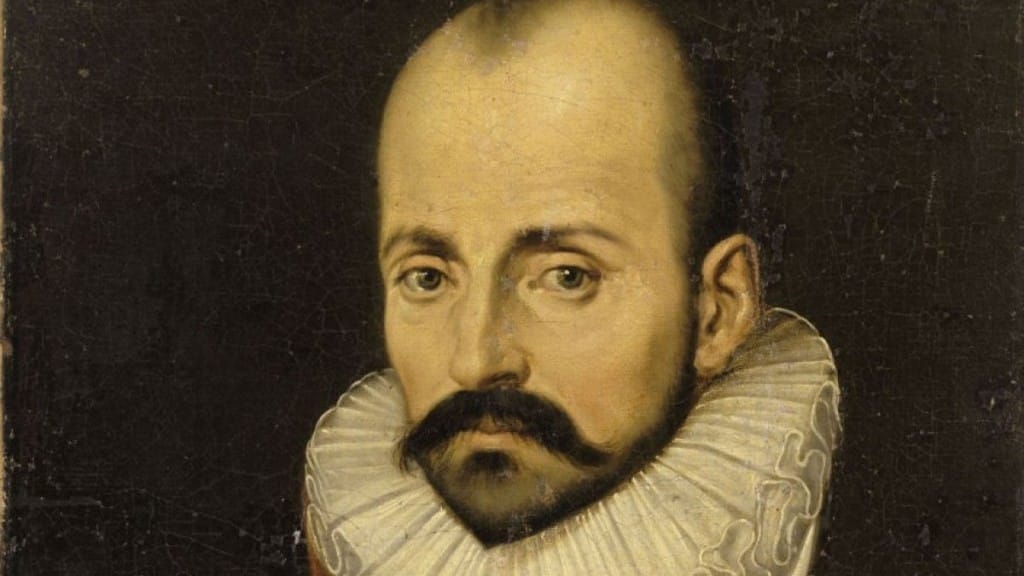
Half a millennia ago, though it could have been yesterday, French nobleman and essayist Michel de Montaigne wrote:
“If others examined themselves attentively, as I do, they would find themselves, as I do, full of inanity and nonsense. Get rid of it I cannot without getting rid of myself. We are all steeped in it, one as much as another, but those who are aware of it are a little better off.”
– Montaigne
We’re all full of shit, he’s saying, but it’s how attentive we are to what we’re steeped in, and what that means, that counts.
How we come by our opinions
Habitus + Experiences + Environment = Opinions
The first drafts of this essay were titled Work Harder For Your Opinions. This is typical me, thinking hard work is the answer. It’s my go-to. Struggling? GRIND YOURSELF TO A PASTE. This approach got me through university as an insecure 17 year old, floundering in a world I had no reference for. Every night after I got the baby down, I’d study ‘til my eyes wouldn’t open. Fuelled by hand-rolled cigarettes and instant coffee, I was determined to earn my place among my peers. (I have employed this method to steadily diminishing effect in the subsequent two decades.)
My self-flagellation strategy is borne of what French sociologist Pierre Bordieu (we’re sticking with the Frenchmen for a bit) called habitus. Bordieu said beliefs feel personal and freely chosen, but they’re actually a glory box of sorts, gifted from our families, added to by culture. Montaigne, too, was sceptical of habit, describing it as a "violent and treacherous schoolteacher" that steals control of our minds and actions. Growing up, my habitus was something like: “you’ll never have what others do, but dignity comes from a good work ethic, (and pristine kitchen bench, and neatly folded washing).” This paired beautifully with another maxim: “…and never, ever ask for help.” Violent schoolteacher indeed.
Habitus is the skeleton we hang our subsequent experiences from. Whether you come from a liberal household, pointing your rear end to the sun, or a conservative home keeping your unspeakables hidden, you bring that foundation to every experience you have. Without a regular intellectual enema, you repeat the stories you internalised as a kid. Every time I work too hard and collapse, every time I’m crying in the bath wondering why it has to be so hard, I learn this lesson again.
Our habitus isn’t our fault - but it isn’t benign, either. Marx, two centuries after Montaigne, (on to the Germans now) famously wrote that “The ideas of the ruling class are, in any age, the ruling ideas." We think how the powerful want us to think. Looking at my work ethic, he might point out how convenient it is that the working-class see hard work as noble. Better to keep us with our heads down and bums up than asking questions about who enjoys the fruits of our labour!
We’re permeable creatures, us. Our family, culture, class and power structures, traditional and social media, peers, colleagues, commentators – all these forces, and others besides, influence our opinions, which shape how we show up in the world. This has always been true. But the environment is shifting.
The new opinion environment

In decades past, our information environment was pretty homogenous. You picked which channel to watch, but the six o’clock news was largely the same. You picked which newspaper to subscribe to, but the stories were much of a muchness. We watched the same TV shows, at the same time, and raced to the loo in the ads.
These sources spread grand, uniting meta-narratives: progress, growth, democracy. The world, we were told, was good, and getting better.
Now, our information and entertainment landscapes are fractured, asynchronous, and personalised. Your social media feed is not the same as mine. You see different headlines, different content, and watch different things on TV. News is dynamic, updating headlines and content in response to click patterns, and rabbit holes abound.
These divisions show up in the real world. In 2022, when hundreds of protestors occupied the ground of New Zealand’s Parliament, we realised that YouTube conspiracies and Facebook misinformation weren’t limited to the digital realm – they were leaking into reality. Fake news convinced at-risk Nannas not to get vaccinated and farmers to join a convoy.
AI has changed the game. As social media enshittifies and traditional journalism declines, our views and opinions can be produced for us - drafted in concise, compelling language by the sycophant in our pockets. All the internet’s bias and fuckery is rolled into a chatty wee tool to navigate the overwhelm of an environment that has more information to process than ever before.
This isn't necessarily terrible. Large language models are still (as far as we know) free of sponsored content or advertising. But if the enshittification curve we've observed in other online platforms repeats, this could shift. Then, our thinking risks being sold to the highest bidder.
Today’s information environment is a double-edged sword. On the one hand, we can access more than ever. On the other, this information abundance is overwhelming - which has, in turn, created the market for tools to parse, analyse, and synthesise. We expand, then we contract. (Not making the asshole link here, but I reckon you’ve already done it. Sorry.)
Words create worlds
In my favourite novel, Freedom, Jonathan Franzen writes: “Words create worlds.” Our opinions shape the world we live in. If we believe in equality, we push for equal pay, marriage rights and unisex bathrooms. If we believe in the meritocracy, we support tax reform and challenge welfare payouts. Stories justify or undermine our social infrastructure. They recirculate as news, history, policy, and school curriculums, before they embed as values, ideologies, and social norms.
Barry Schwartz (time to let the Americans have a say) coined the term ‘idea technology.’ The stories we tell about human nature, urges Schwartz, shape human nature itself. If we think women incapable of civic engagement, we design institutions that reflect and reinforce that idea. We bring our ideas to life through our policy, school curriculum, justice system, and media – and our opinions are, in turn, shaped by these forces.
The changes in our environment should have us asking: what kind of world are poised to create? If we form our opinions with AI, who will this benefit? If we delegate our thinking to an algorithm or consume only what we're fed, what does this mean for social progress?
The risk of getting stuck
Modern philosopher Will MacAskill (we’re going English, now) has a name for this threat: value lock-in. In What We Owe the Future, he explains that a dominant power structure will seek to entrench its views, to "eliminate the competition, and take steps to replicate itself over time." This is dangerous, he warns, for social progress. “If the world converged on a single value system, there would be much less pressure for those values to change over time.”
God forbid we get stuck in the ruling ideas of any era. If we turn back the clock to any point in history, we’d be quickly embarrassed by how we thought. Our opinions are always changing as new facts come to light, and enlightened thinkers push for better.
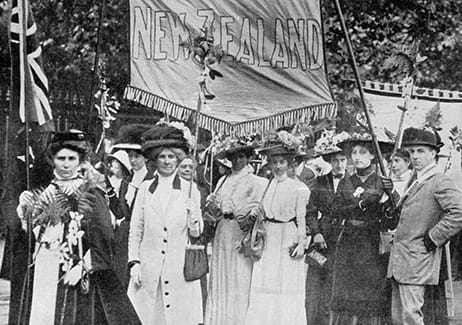
This is the role of social activism - the dynamic, collective force that forces us to revise our opinions. When women united to demand the vote, the consequences were dire. In the UK and US, suffragettes were subjected to violent, painful force-feeding by prison authorities.
In New Zealand, newspaper critics lampooned them as "the shrieking sisterhood," "old maids," or "unsexed" women trying to act like men. The facts of the time painted women as idiots, sensitive creatures incapable of the rational thought needed to participate in civil society. Yet, across the country, housewives attended meetings in secret, organised phone trees, and signed petitions to force an update of those facts.
What Kate Sheppard and suffragettes the world over understood was not just how to argue for the vote, but how to build an opinion that could travel - through church groups, living rooms, union halls and letterboxes - until it no longer belonged to any one woman at all.
We are all responsible for progress
Michel de Montaigne was a pioneer – he invented the essay form, in fact, coining the term essais, meaning "attempts" or "trials", from the French verb essayer (“to try”.)
Montaigne wrote into contradiction, used himself as a subject and unspooled streams of consciousness. He was unconcerned with how popular or correct his opinions might be, committing instead to the process, comfortable in the uncertainty. Montaigne explained, “If my mind could gain a firm footing, I would not make essays. I would make decisions.” Touche, old chap.
This was a safer stance for a landed French nobleman than a force-fed housewife, mind you. History is riddled with examples of oppressed minorities rising up to force change the social order, but the onus for change should never lie solely with the disenfranchised. Those of us that live at the top end of Maslow’s hierarchy, with unparalleled access to information and new perspectives, have a responsibility to the collective to pick at our old scabs and push for progress.
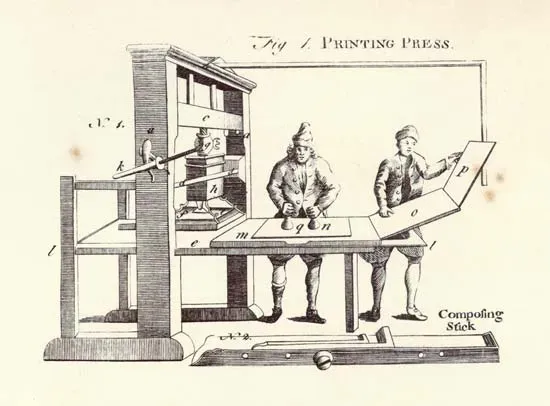
Our opinions, then, should be as dynamic, impermanent and relational as Montaigne’s essays, or indeed, our societies - formed and reformed as questions, explorations, and experiments. Previous information tools, from the printing press to the internet, supported this dynamism. As expansive technologies, they offered access to different ways of thinking about the world. As new technologies bring synthesis and contraction to the chaos we’ve created, we require awareness about the effect on our thinking and loss of questioning.
Assume you will become a Boomer
Our opinions tend to settle with time. The heyday of my university years, where I felt like a sponge for new ideas, hungry for radicalism and challenge, feels much longer than 20 years ago. I feel it most in the small things – I have a preferred washing powder, I like my coffee machine, I don’t want to replace my car – and it makes me wonder where bigger blind spots might be forming.
Social progress narratives are often accompanied by commentators proclaiming they support what’s come before, but now things are getting out of hand. Manosphere influencers, for example, will tell you they like the old, real feminism. They're glad women can vote, but all this newfangled domestic labour stuff is a step too far. On some level, this makes sense to me. I sense my reluctance to pivot, the attachment I’ve formed to my thinking, the things I need to be true for my life choices to be justified. Constant interrogation is exhausting, and as our identities entrench, so too do our opinions.
This is clearest to me as my older children challenge me with their freshly forming ideas. Enjoying a BBQ on the deck this summer, I was midway through a funny story about an online purchase, when my eldest daughter interrupted. “Mum! Why are you buying from Temu?!” I clenched, feeling attacked, indignant. “It’s the same shit you get from the Warehouse!” I sputtered. “Maybe. But shouldn’t you be trying to buy less shit and care more about the environment? Temu is a last resort. I’m a broke student and even I try not to buy from there.”
She was scornful. I was ashamed. She was right. Decades ago, I was the wokest person in the room. Now, compared to my kids, I’m a curmudgeonly Boomer. So it goes.
Facts are rarely factual

Facts should be a safer bet though, right? Surely if we’ve spent our lives as learned scholars, accumulating degrees and reading referenced opuses (opi?!) we should be safe from subjective faff?
I mean, maybe. If you’re the kind of person who’s hitting up primary sources and critically evaluating research methods, fantastic. But even then, we need to be careful of epistemology information cosplaying as empiricism. Opinions shape the facts of the day – which statistics we use, what research we fund, what methodology we use, and what assumptions we make. They determine which facts we consider relevant, and which ones we are able to ignore. All data is a result of choices, and few choices are impervious to bias.
Even if our facts are bulletproof, we have trouble changing people’s feelings with them. I’ve worked with enough politicians and senior executives to tell you all the high-falutin’ research, data and expert advice is for nothing if we don’t confront the clenched opinions in the room. Without considering existing bias, personal feelings and prevailing norms, painstaking reports, briefings and recommendations are wasted.
This isn't (often) because decision-makers are stupid or difficult, but because they are people, who need filters to process information. As do the people who need to implement or accept these policy outcomes. Addressing biases and half-formed opinions is how things change - perhaps the only way.
But all this is easier said than done. Once we grab onto an opinion, we hold it tightly inside us, whether we know it or not.
Inferior opinions create unfair realities
Early-formed opinions are sticky and tricky. I’ve just finished Caste by Isabel Wilkerson, and the statistics are sobering. Racial bias forms early and becomes automatic, even when we shift our views. Many adults sincerely reject racism and still make pre-conscious racist judgments - split second decisions to cross the street, hire one candidate over another, or assume who’s a shop assistant and who’s a customer.
The habitus absorbed in early life needs consistent, intentional interrogation and revision to shift our behaviour. The greater the moral consequences of this behaviour, the greater the onus to do this work. As Adam Mastroianni recently wrote: “Being ignorant of the forces shaping society does not exempt you from their influence—it places you at their mercy.”
Think about an opinion you once held with absolute certainty… what changed it, if anything? Have you softened, or hardened? Clenched or unclenched? When was the last time you gave it closer examination, or made it vulnerable to reality?
Opinions are instruments of power

Montaigne, too, looked to his ancients for wisdom. He was a big fan of Stoic philosophy. To the Stoics, 1,500 years before him, what mattered most was not so much making the right judgment, but how you related to them - with discipline, humility and ethical responsibility. Epictetus said “It is not things themselves that disturb people, but their judgements about those things.” This is solid advice. It’s a shame it was limited to the literate elite.
If opinions shape people and systems, then we must be accountable for the consequences of our judgements. Consequences are never neutral. To evaluate the quality of our opinions is to ask not just why do I think like this but who benefits when I do?
This is power literacy. Power literacy is the opposite of clenching; it’s exposure. It’s where we go behind the curtain to see how systems and stories interact.
When we bring this interrogation to our opinions, we transcend the facts of the day. The suffragettes understood that while the available evidence suggested women were too silly to vote, this thinking was embedded in patriarchy, assumptions that upheld the current power structure, and outright hypocrisy.
"If it's right for men to fight for their freedom, then it's right for women to fight for theirs." - Emmeline Pankhurst
They also understood these ideas supported the existing hierarchy – and the people who needed to change the law were the ones who benefited most from it.
"We do not want to be law breakers.” Emmeline Pankhurst famously proclaimed. “We want to be law makers." If we want moral progress, t’s not enough to challenge the systems – we need to tackle the stories that underpin them. And that works starts with us.
How to audit your opinions
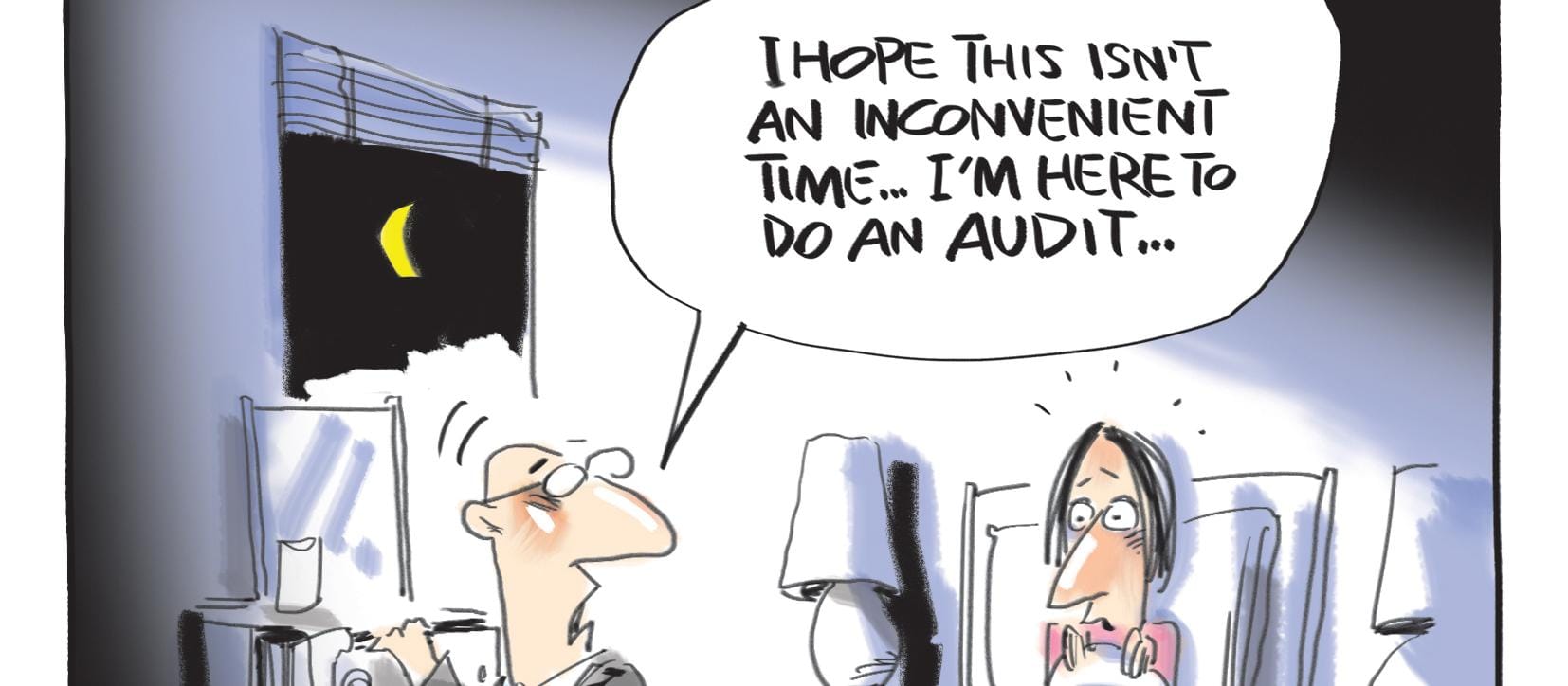
The quality of our opinions can be usefully judged on three criteria: how much we care, how confident we are in their accuracy, and the consequences of their application.
Care: detach ideas from identities
Care is about how attached we are to an idea. This is where we pick at our habitus, to find ourselves, as Montaigne did, “full of inanity and nonsense.” We are hormone-fuelled flesh bags powered by norms and narratives, and there is no escaping our ego and fallibility. But, as Montaigne urged us, “those who are aware of it are a little better off.”
Awareness and humility prevent us from conflating our ideas and identities. I can only update my earliest programming from “I have to work harder than everyone else if I want to be good enough” if I can peel this thought away from my core beliefs, hold it to the light and watch the prisms it casts. Only when I truly believe that I can release this opinion without compromising my character will I be able to let it go. (Working on it)
I observe the same dynamic in Council decisions. Productive political conversations avoid concrete positions and core ideology, and speak instead of shared values and principles. No politician will drop an opinion because someone proves them stupid. That’s public and political suicide. But they will come to a position of alignment and reason when they have the opportunity to change their mind and keep their dignity intact.
Confidence: seek evidence and perspective
Confidence is about how accurate our opinions are. Our thinking is informed by partial and biased information – counteracting that asks us to dig deeper and challenge ourselves with other worldviews, new perspectives, and a wider evidence-base. Confidence requires research and interrogation and in a world of personalised algorithms and AI-generated outputs, the standard of proof has risen.
Fortunately, it has never been easier to access the world’s expertise at your fingertips. Rather than being a regression of critical thought, this could well be the best, easiest, and most impactful time to form considered opinions.
Yes, the world in your pocket is an algorithmic rabbit hole designed to keep you hooked and make you stupid. Yes, technology companies are extractive enshittifiers. Yes, control of social infrastructure is concentrating in the hands of corporate interests and the AI bros at conferences aren’t helping.
Yet here we are, with more information available to us than ever before, most freely or cheaply. The world’s best thinking is a fingertap away. There are libraries filled with books, online channels overflowing with diverse ideas, communities of interest in every corner of the globe, and more listening hours of expert advice, debate and informed criticism as audiobooks, video essays, recorded panels and podcasts than you could consume in a lifetime. I learn more on my daily walk than I did in entire university papers. (I learn even more when I get home and talk about it with my family.)
High value opinions, I remain convinced, are the ones we have read widely and listened carefully for. Where we’ve consumed criticism that debunks, contextualises, and complicates. Where we’ve tried to organise our thinking by writing it down or sharing it with others.
We can become active managers of our opinion portfolios, hungry for new ways of thinking and alternative points of view. We can hunt for context and diversity. We can go deep on different formats - long-form journalism over headlines, books over news feeds, primary sources over clickbait, fiction alongside theory., documentaries instead of short-form videos.
Our information sources cannot be reliably outsourced to an algorithm optimised for engagement. We’ll have to unclench and go looking.
Consequences: take moral accountability
Consequences are about how accountable we are for our opinions.
Good opinions, the kind that get women the vote and push back on harmful ideas, aren’t a private affair. They are relational and morally accountable, revised as society changes. This requires power literacy, and the fortitude to push back when the consequences do not align with our values.
It also requires engagement with our surroundings, and a widening and deepening of the context our opinions exist in. The ‘Opinion’ environment bursts with hot takes on issues such as transgender rights, women’s bodies, youth politics and the rise of neurodiversity, but rarely are these columnists or pundits in the firing line for their ideas - and even more rarely are they held accountable for perpetrating harm, spreading misinformation or inciting prejudice.
Conversations that take place behind closed doors, inside algorithms, down YouTube rabbit holes, on incel forums, or with a sycophantic chatbot, don’t move us forward. It’s too easy to demonise a person, or a group of people from a distance, to form opinions about their worth or their intelligence. Anonymous commenting was the beginning of the end. But rarely do these opinions survive daylight. Rare is the person who can look a fellow human being in the eye and tell them they’re undeserving of dignity.
Before we open our mouths, or hit publish on an AI-assisted post, we should consider the value and impact of our views. The further removed we are from the impact of our opinions, the more concerned we should be about the consequences.
Working together for our opinions

In the first iterations of this essay, I was overly attached to the idea of working hard for your opinions. I thought confidence was the only thing that mattered. Work harder, be righter, and all will be well. But this was narrow-minded. The way our habitus and identities tangle with our thinking, and the environment that both shapes and is shaped by our thinking are just as important as the quality of our research.
Progress isn’t driven by a clever individual. Emmeline Pankhurst being right didn’t get women the vote. Moral and social progress requires personal interrogation, environmental awareness, and a collective willingness to engage with opposing views and ideas.
Our social and epistemic infrastructure, from the printing press to the chatbot, the school curriculum to the policy environment, can offer us intellectual and moral expansion or contraction – and little of this is inherent in the technology. Technology adoption is neither inevitable nor uncontrollable, and the choices we make now will have ripple effects into the future.
AI is a threat to critical thinking, for people who let it think for them and aren’t vulnerable, curious, or morally accountable enough to try harder. But I reckon people are better than that. And I suspect that if we double down on community, connection, and dialogue, we’ll come out of this better, not worse.
As Old Mate Montaigne wrote:
Stubborn and ardent clinging to one's opinion is the best proof of stupidity.
If I was revising my initial instruction, as twee as it sounds, I’d move from work harder for your opinions to something like work together for your opinions. If the quality of an opinion is measured by its consequences, then good opinions can’t be private outcomes or achievements.
If you’ve read this far, thank you for your time, your curiosity, and your openness. Above all, thank you all for being part of this community of thinkers.
Together, we can keep our opinions, and our assholes, where they belong: unclenched, out in the world, and open to change.


