

⚡️ Welcome to Wednesday Wisdom: your weekly dose of useful insight.
This week:
- Having an opinion is easy; understanding one is hard.
- Treat yourself like a character in a novel.
- Join a live 90-minute workshop to practice these skills.
Would you ever slap a kid? What if it wasn't your kid?
I re-read Christos Tsolkias' The Slap this week. It's a rollicking read and I appreciated it all the more with my author-hat on, looking at structure and points of view.
If you're not familiar with The Slap (where have you been? It's even a Netflix show!), the basic premise is this: at a suburban barbecue, a man slaps someone's child. The fallout is instant and the family splits into factions.
We read the perspectives of eight different people who were at the barbecue. As the story unfolds, Tsolkias does a masterful job weaving subplots where our characters' lives and opinions collide in increasingly tense ways.
Everyone is their own main character
The characters aren't responding to the slap so much as what the slap means to them - or about them. They all have their own shit going on - insecurities, relationship dramas, backstories, families, cultural beliefs - and they're all telling themselves a story about the kind of person they are.
Those stories don't always match up with their actions. One outraged and protective adult is also a violent drunk. One loyal family man is also a cheating predator. By jumping from one person's head to another, we see how identities and opinions are formed, how and when people choose to express themselves (or not), and the disconnects and conflicts between the values we profess, and the ones we live.
Every person is the main character of their own story, but a supporting actor or subplot in everyone else's. The Slap explores how our identities and opinions enmesh, how they affect the people around us, and how ignorant and unaccountable we can be.
The cast of characters are terrifically human. They're hypocritical, well-meaning, and contradictory. They self-sabotage. They have capacity for narrow-mindedness and self-reflection, self-righteousness and moral complexity, connection, and revision.
We, too, are terrifically human. And our opinions, if we let them, can deepen and mature in the face of conflict, or they can retrench and embed.
Having an opinion vs understanding an opinion
There is a big difference between having an opinion and understanding an opinion.
Having an opinion is easy. It’s often instant, automatic, maybe even emotional. They feel like common sense (and we should always be very suspicious of common sense.)
Understanding an opinions is harder. It requires us to treat ourselves a bit like a character in a novel, step outside of our heads, and ask tricky questions, like:
- Why does this feel so obvious to me?
- What assumptions am I making without noticing?
- What would someone with a completely different life experience see here?
Be a character in your own story
In The Slap, everyone is convinced they’re the reasonable one. They can all justify who they are, what they think, and why they're right. But everyone misses vital pieces of the puzzle. (Except for us, the reader, which is the gift of fiction.)
We rarely get the same insight into real-life people's heads as a book character, but we can aim to have some into our own.
When we zoom out and treat ourselves like a character in a novel - backstory, internal monologue, core experiences, conflicts, and insecurities - we understand ourselves and the way we think better. Then, we can decide if anything needs to change.
You're only a minor character in someone else's story, but if you're not aware of yourself, you could affect them in ways you never intended to.
Til next week,
AM
Live workshop on opinions next week
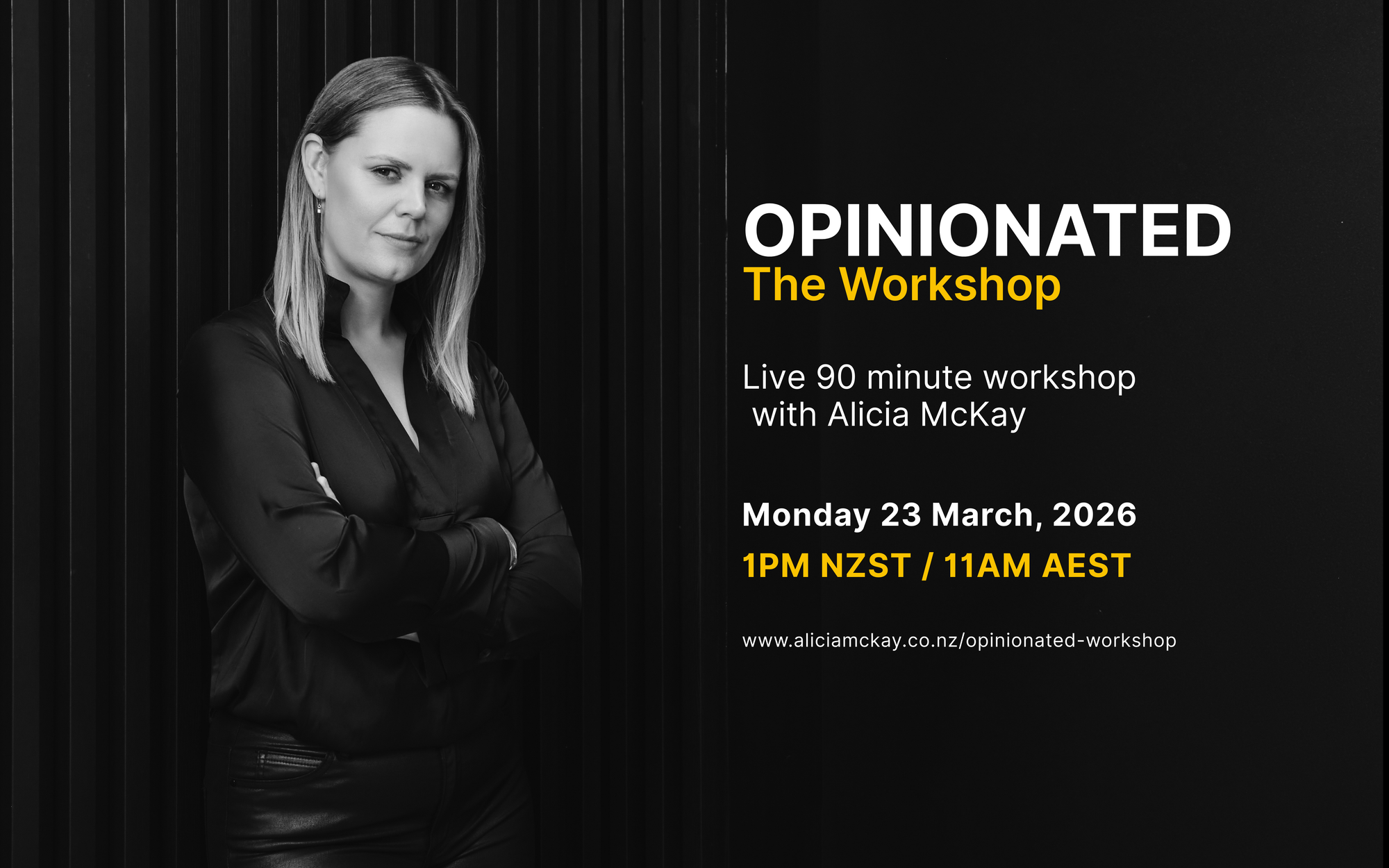
I released the Opinionated Toolkit this week, which is packed with practical resources to interrogate and upgrade your opinions. But then I thought: wouldn’t this be more fun to do together?
So next Monday, 23rd of March, I'm running a live 90-minute workshop to help you understand and upgrade your opinions. It's free for paid subscribers.
We'll test our opinions together, in real time. You'll bring some opinions you already hold - about work, society, leadership, technology, or whatever annoys you most - and we'll stress-test them. (How much, if anything, you choose to share with others is totally up to you.)
By the end of the workshop, you’ll understand:
- Which of your opinions are earned.
- How your opinions affect others.
- How to upgrade your thinking.
If you're still on a free sub, this is your sign to take the leap.
AM


