
 Think for yourself
 See more clearly
 Make better decisions
 Live on your own terms
 Speaking
 Training


Ah, boundaries. Millennial therapy speak 101, amirite? I wrote about boundaries in last week's Friday Flurry - the risk of 'squishy' people infiltrating your wellbeing with their poor boundaries and weak sense of self. This week I'm turning the mirror around, because the squishy person in someone else's story might be you.
Boundaries and responsibility
People who lead families, teams, and communities tend to be high-responsibility people - and high-responsibility people can take on too much. Lots of Not An MBA graduate stories mention the relief and impact of saying no.
My favourite take on responsibility comes from Brené Brown (👑). Brown breaks it down to response-ability. You can't control what comes at you, or what others do - but you always have the ability to determine your response. Genius.
You can decide your response on the spot (and sometimes you'll have to), but if you want to be a consistent, reliable person who others can depend on, I suggest having some personal policies to guide you - a.k.a. boundaries.
Boundaries aren't just for you
My earlier work on boundaries is largely around what they do for you: they operationalise your values, offer you invisible armour in tricky situations, open doors to new opportunities, and stem the flow of whatever's draining you.
This is all great stuff, but it misses what your boundaries do for the people around you: boundaries are an act of leadership, and a facilitator of trust.
Boundaries and leadership
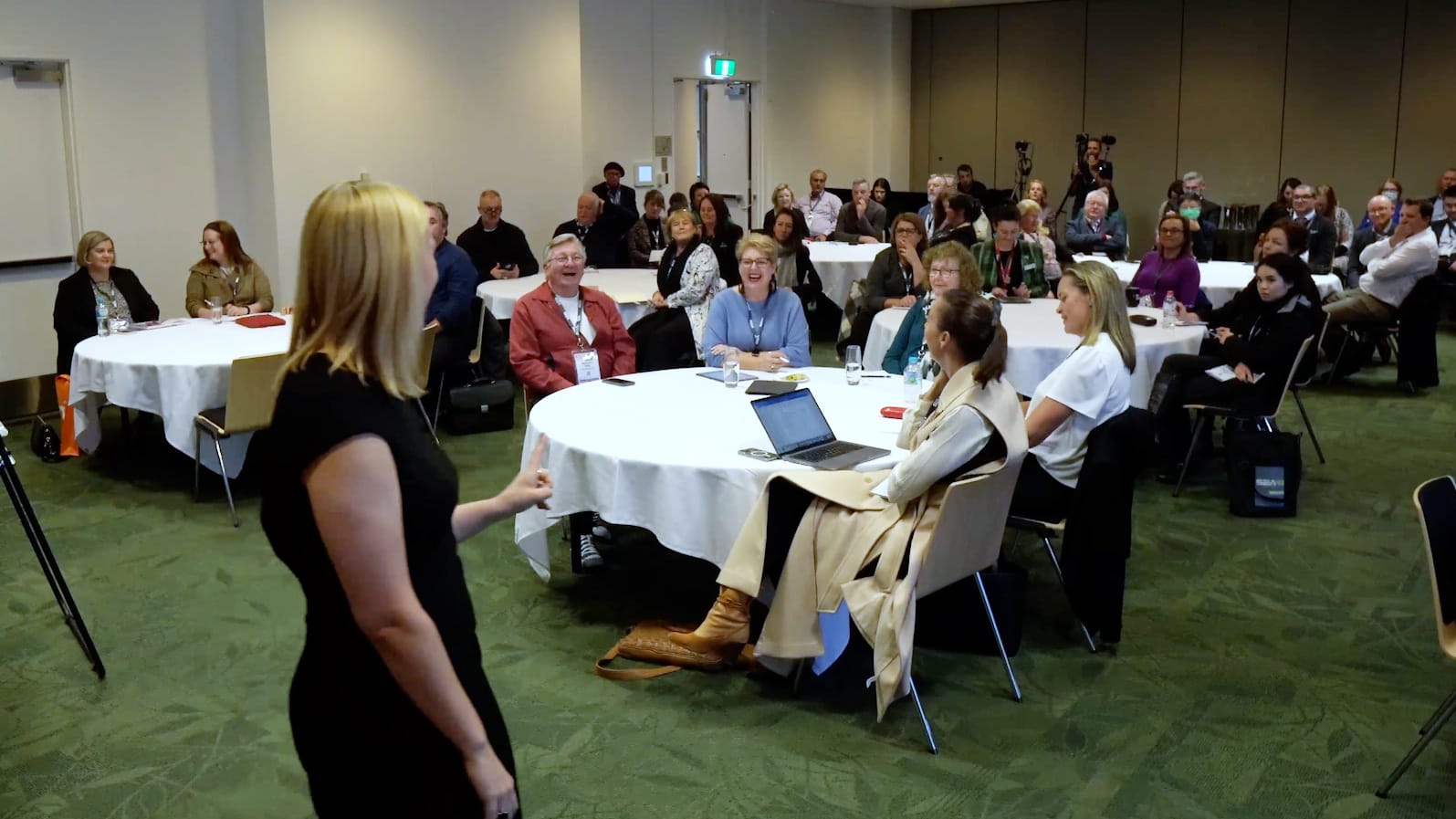
At the height of the pandemic, I ran an online workshop for some rural firefighters in Australia. They were locked down, and their senior leaders had sent a clear message: in this wild time, put your families and wellbeing first, not work.
Naw. This would have been great, except the email which contained this message was sent on a Sunday at 11pm. They were saying one thing, but doing another. The message staff heard was: to succeed around here, this is how you'll behave.
And hey, the sender might have spent the whole week chilling with their family and looking after their health, hence the weird time, but that's not what lands. (Also: scheduled send, guys, get on it.)
When you're in charge of a team, family, or organisation, your boundaries don't just affect you. They become a model for what success looks like and they risk becoming everyone else's default. If you send emails at 11pm on a Sunday, your team learns that's what leaders do. If you say yes to every request that comes down the chain, your people inherit the workload. If everything is urgent to you, nothing is a priority for them.
Holding a line is a powerful thing. It shows people it's allowed. It also gives them room to grow, because every time you over-function, you take away someone else's chance to step up.
Boundaries and trust
Poor boundaries make you untrustworthy. If you say yes all the time, to everything, you'll end up stressed out, overworked, and dropping balls. This makes you unreliable, no matter how good your intentions are.
When you're a yes man/woman/person, your yes stops meaning anything.
That makes you the squishy person in someone else’s Friday Flurry. From this angle, boundaries aren't so much a self-care indulgence as a cornerstone of your personal integrity and a gift to the people around you.
(This angle hits hard with high-responsibility leaders on naMBA. They might squirm at setting limits for themselves, but they do not want to let others down!)
"There is no trust without boundaries" - Brené Brown
Queen Brown, in her viral video on what trust is made of, uses the acronym BRAVING. Guess what the B is for? You guessed it: boundaries. There is no trust without boundaries. You don't ruin relationships by being clear, consistent, and values-aligned; you improve them. When you're honest about what you can and can't do, and stick to it, your word carries more weight. Every no makes a yes mean more.
Where to go from here
There's no universal rulebook for what your boundaries should be, because boundaries aren't universal rules, they're personal policies. But if you're looking for guidance for what to do about your habits and niggles, check out this workbook.
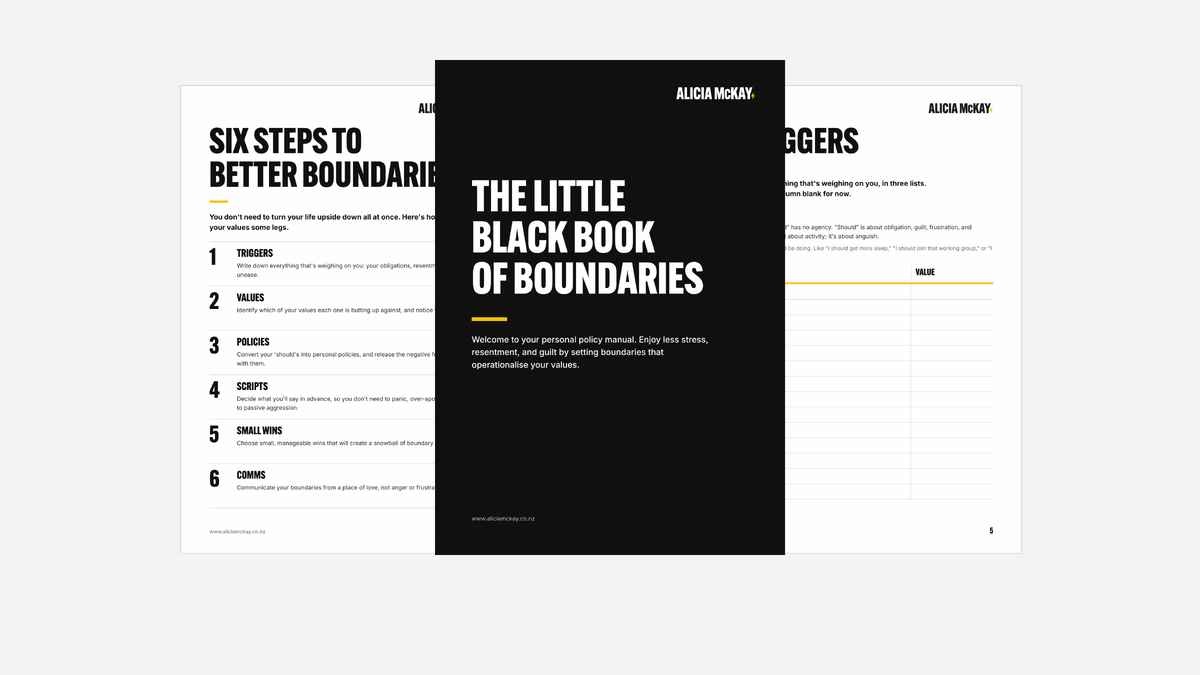
The Little Black Book of Boundaries is a workbook for paid members. It's a six-step, fillable guide for turning your triggers into clear boundaries, expressed as personal policies. Enjoy!
 Alicia McKay
Til next week,
A
P.S. Boundaries are week two of Not An MBA. If you’re the person everyone depends on, check out upcoming cohorts.