


This week I attended a Democracy Done Better lecture with Iain Walker from Australian-based newDemocracy. They're keen proponents for deliberative democracy: citizens' assemblies and participatory budgeting.
The foundation of Walker's talk was one most people in the room agreed with: trust in democratic institutions is declining. Politics feels performative, tribal and reactive. People feel disconnected from big decisions. Hard to argue with that.
newDemocracy's propose a move from political decisions based on “public opinion” (loud, emotional) to “public judgement” (informed and deliberative.) Citizens’ assemblies, he argues, produce more nuance and legitimacy than politicians trapped by election cycles and media outrage.
There’s merit to this, particularly for hot button issues. The Irish Citizens’ Assembly process on abortion reform, cited by Walker, is a headline example of deliberative democracy - though its role and effectiveness is still the subject of debate, and the ongoing legitimacy of assemblies in Ireland is uncertain.
As I listened to the presentation, I kept having the same thought. We already have a structure for this: local government.
Local government is the closest thing to direct democracy
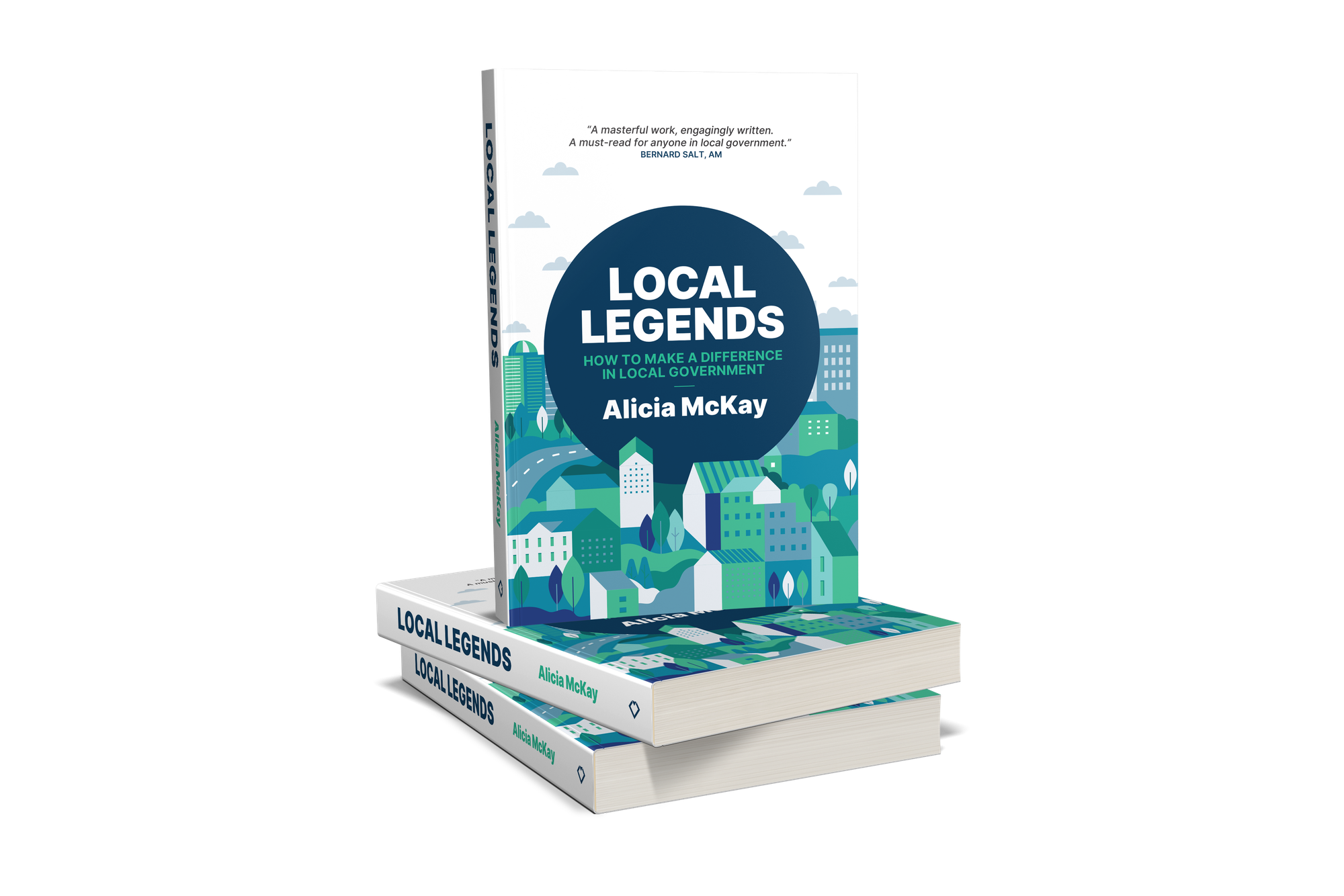
Local government is the closest thing we have to direct democracy. Ordinary people - part-time amateurs, for the most part - put themselves forward to serve their communities.
Farmers, PTA mums, retirees, local business owners - sometimes with little governance or leadership experience - sit around the table to balance competing interests with finite resources. Outside of the metropolitan Councils, party lines often fall away. There is more genuine pluralism in Council than any other sphere of government.
Structural barriers still throttle representation
None of which suggests local government is perfectly representative. Elected members still skew older, wealthier, and maler. ('Pale, male, stale', is the common refrain.)
Structural barriers exclude young people, women, disabled people, renters and people juggling caring responsibilities. The 'missing cohort' of young women is particularly well documented, and tied as much to domestic labour and role strain as formal political barriers. (Read more about this in The P Tax.)
 Alicia McKay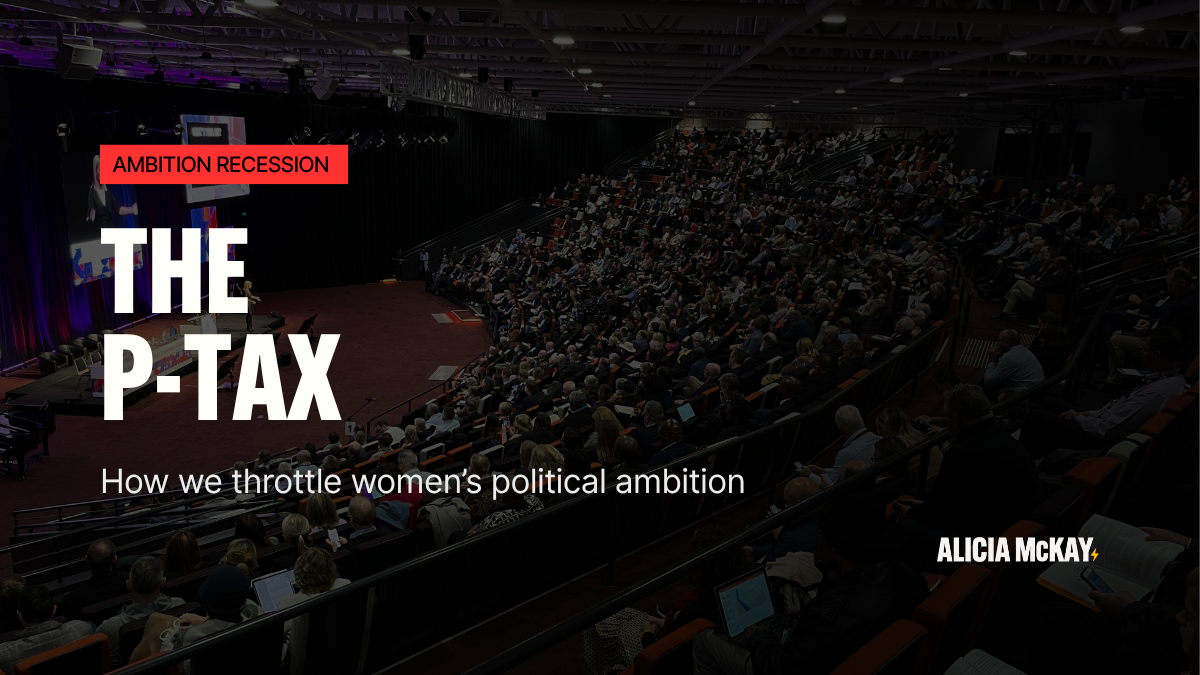
Things are shifting, though never fast enough. But I remain convinced that local government is structurally capable of being the most representative tier of government. It works closest to people’s lived realities, elected members are accessible to the public, and there are lower formal barriers to engagement and participation.
Inequalities in representation can be overcome, if we're willing to finally tool up this latent resource, through things like childcare provision, remuneration, and targeted efforts to drive participation - such as the Pathways to Politics programme in Australia.
We need to tackle these barriers in politics itself, not just in consultation, because participation is not the same as power.
Participation is not the same as power
I appreciated VUW political theorist Claire Timperley’s contribution to the panel discussion. She noted that even theoretically equal spaces like citizens' assemblies are still shaped by social hierarchies. Some people walk in already believing they have the right to speak while others don’t.
Just like the gender gap in local representation (and pay, and domestic labour, and and and), democratic inequality isn’t just about whether people are allowed to participate. It’s about whether they're equipped, authorised, safe, and capable of doing so meaningfully.
This problem doesn’t disappear inside a citizens’ assembly. Deliberative democracy can produce better engagement than the oft-dreadful consultation exercises government currently run. But it won't redistribute power or eliminate the social and economic conditions that shape who participates in public life.
We can and should require engagement to be done differently - earlier input into decision-making, more diverse and representative views, clearer surfacing of financial and moral tradeoffs. Deliberative democracy is an excellent way to do that. But it shouldn't replace structural improvements to the systems we already have. Adding another complication to a system will only paper the cracks.
Nobody is outside the system
Walker's thesis had a layer of inevitability and cynicism I found disconcerting. The implicit assumption - which I'll admit is a real crowd-pleaser - is that ordinary politics is uniquely and inherently corrupted. Egos, lobbying, incentives, tribalism and self-interest are just how politics is (or how politicians are), he seemed to say.
The suggestion is that deliberative mechanisms will somehow sit above and outside those forces. If we only expanded this system, it won't be corrupted like the others. (Per my recent piece quoting the inimitable John Clarke: it'll be outside the environment.)
 Alicia McKay
But citizens’ assemblies are still shaped by structural choices: process design, facilitators, information framing, and cultural confidence. They still operate within the same social and economic landscape, with the same broader systems of power.
Embedded and expanded, they will risk the same legitimacy pressures, institutional constraints and public distrust. If people see enough of them on the news, best believe they'll start challenging them too.
Accountability matters
I asked two questions at the end of the presentation:
- Could this effort could be better spent enhancing existing structures, particularly local government?
- Is there a risk to democracy by removing the accountability mechanism from decision making?
Both questions were largely dismissed. Politicians, Walker suggested, aren’t truly accountable anyway. Councillors are just corrupt property developers and real estate agents who don’t know how to balance a budget.
I find that cynical and disconcerting.
Councils, like other spheres of government, have their issues. Local government can be parochial - captured by narrow interests, dominated by loud voices and resistant to change. Some Councillors are incompetent, or driven by ego or self-interest. Some Councils make poor decisions.
But dismissing democratic accountability altogether is reckless. As I wrote in this piece: when we decouple decision-making from accountability, we create a dangerous vacuum. Citizens’ assemblies can enrich the democratic process but cannot shortcut them without running into a legitimacy problem.
Elected leaders still carry ultimate responsibility for decisions - and are removable if people disagree with them. This matters.
 Alicia McKay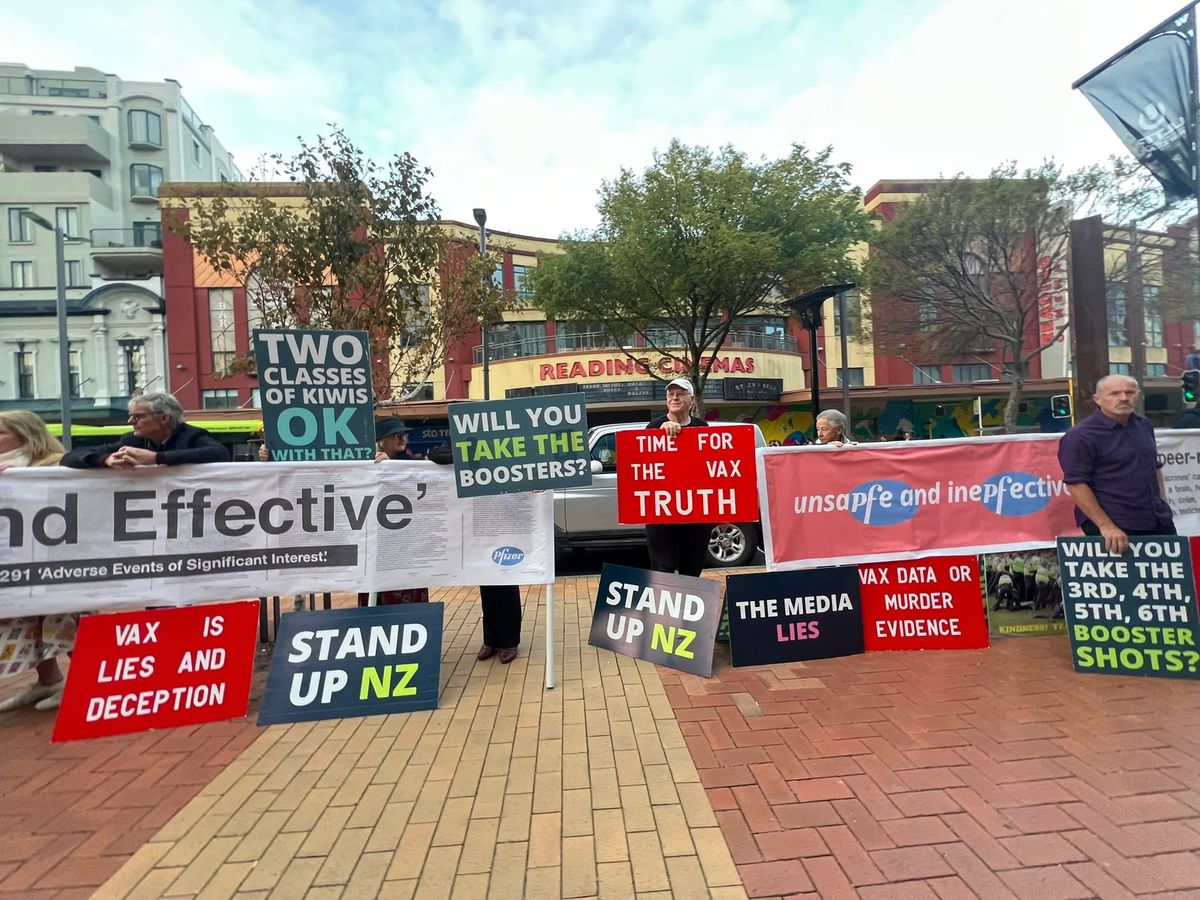
It is unhelpful to invent parallel democratic structures instead of improving the institutions we already have - particularly unhelpful to do so on the basis of undermining those institutions. And no sphere of government is undermined as consistently and contemptuously as local government.
Local government and political gaslighting
Higher tiers of government kneecap Councils financially while mocking them. Councils are expected to solve increasingly complex local problems while operating with constrained mandates, limited fiscal tools and outright public hostility. Local government is highly efficient and productive, yet is consistently portrayed as financially irresponsible and poorly performing.
 Alicia McKay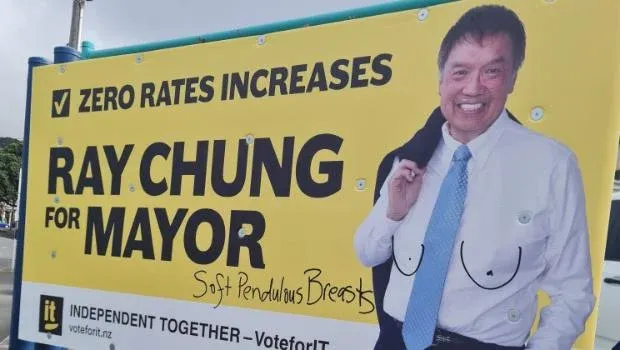
The contradictory demands on Councils are tantamount to gaslighting. We demand local responsiveness while stripping local autonomy. We say we want intergenerational outcomes and infrastructure, while introducing rates caps, cost-shifting state services, and fiddling constantly with the legislative mandate. We say we want politics brought closer to the people, while centralising decision-making power. We say we want to tackle democratic disengagement, while we treat the closest level of government as administratively embarrassing.
This isn't just annoying, it's a waste of democratic potential. Local government is one of the few remaining spaces where democracy has a tangible, physical interface. Pipes either get built or they don’t. Roads either flood or they don’t. Libraries either stay open or they don’t. Tradeoffs become tangible very quickly at the local level in a way state and national politics often obscures.
Repair the foundations
Deliberative democracy is a valuable way to enhance civic engagement but is not a workaround for low trust in politics or a replacement for well-functioning democratic infrastructure. The problem is far bigger than politics or politicians.
Polarisation and distrust aren't just the products of dysfunctional politics. They are symptoms of broader social, economic, and cultural conditions: inequality, institutional fragmentation, economic precarity, media systems built on outrage, and the erosion of shared public life.
Deliberative democracy doesn't exist outside those conditions, and no new democratic mechanism will permanently escape the distrust and social dynamics affecting other institutions. Once it becomes embedded in the system, it is the system.
We can't workshop our way out of democratic dysfunction, especially not while undermining the institutions closest to people. At some point "democracy done better" has to shift from bolting on new outlets to taking the structures we already have more seriously.
Local government has the bones for this. If only we'd stop dunking on it.