

This Friday Flurry's free. I'll do this a few times a year, to thank loyal members. If you know someone who'd enjoy this, forward it on.
Are we losing the ability to disagree?
I'm into the second week of Not An MBA 2026 and loving being back in the saddle. Week 2 is where we get a bit... uncomfortable. We watch a podcast snippet of two commentators who say a bunch of great things about responsibility, then go on an offensive tangent.
People are torn. Should we write someone off because we dislike them or they hold opposing views? Does it make everything they say wrong? What are the risks of co-signing or amplifying content that doesn't align with our values? But what happens when we shrink from disagreement and discomfort?
We break out for structured debates after that - a rare opportunity to safely practice conflict. It got me thinking about how important it is to be able to disagree well - and whether our information environment is making it harder. So, off down the rabbit hole I went.
The data on disagreement
Before I wrote The idiot test I went deep on bubbles, echo chambers, and polarisation. Most of that research didn't make it into the piece (it rarely does) but it's interesting stuff.
- We're not as polarised as it seems. Most people are in the "exhausted majority" - moderates who get tired of the public mudslinging and opt out of the whole chat. Extreme views monopolise airtime and get amplified by the algorithm, but they don't represent how most people think. The impact is problematic: we avoid tricky conversations in real life, fearing we'll encounter the extremism we see online.
- We do change our minds. I was aware of the "backlash effect" (when hearing disconfirming evidence makes you double down on your initial view) but the data is more complex. The backlash effect is mostly echo chamber behaviour (as opposed to bubbles. More on this here.) It turns out we are open to new information but we get stuck protecting our identity and social ties. If we define ourselves by a group or label, the cost of changing our mind is high.
- Being more engaged can make you more biased. A "paradox of democracy" is that the most informed and engaged voters are prone to the most biased viewpoints. The more you read, the more content points there are to reinforce your view and paint the other side as idiots.
- You can curate your feed... maybe. Our opinions are shaped, intensified, and polarised by the content the algorithm feeds us - but it's partly our fault. When we're served cross-cutting content, we rarely click on it or engage. One study trumpets the power of self-selection to turn the curve, but it involved a minority of highly-engaged users and hasn't replicated across contexts or platforms. In short: assume you're being lured into a bubble unless proven otherwise.
- NZ and Australia are more moderate than the US. Most data on social and political division is US-focused. When you zero in on Australia/ New Zealand, our default setting is pretty moderate. Scraping through the literature, it's partly down to our political systems. Compulsory voting in Australia and MMP in New Zealand have a buffering effect that prevents all-or-nothing thinking and creates far more centrist tendencies. Fascinating!
- NZ had more far-right Facebook followers per capita pre-occupation than the US, Australia, or Canada. Previous point notwithstanding, we're still vulnerable to extreme capture - and the consequences can be dire. In 2022, a dozen loud voices whipped up a frenzy that led to the occupation of Parliament grounds. Because our system isn't built for conflict and violence, we can be caught with our pants down when things kick off. Food for thought.
The future of online ideas
People want to be connected and informed, but enshittification ruined social media and trust in the news is dropping. That's not all bad. Social media sucks, and getting our opinions from the news is risky. When our views are formed by instant, shallow, short-form content and never followed up with disconfirming evidence or deeper nuance, (which tends to come later and quieter), we lose the capacity for deep understanding. Communication technology is seriously messing with us - read Superbloom for a riveting deep-dive.
So what's a curious mind to do? I have a hunch we want something different, and the audacity to believe I can play a role. You tell me my work is "an antidote to the slop filling your inbox and mind" (thanks Kaleigh Smerdon!) and I reckon that matters.
Like you, I value trusted friends and deep thinkers to keep me sharp, and I have a big appetite for things that make me think. It's why I quit the news and avoid social media, but read over 100 books a year and spend my time down research rabbit holes. I don't want to battle platform slop and manipulative dopamine loops to juice my brain. I also want to engage on my own terms - choose when I visit, pick what I read, and not have it ruined by ads and hard sells. I think you might too.
Which leads into...
Your reprieve from the algorithm
If you've been online this week you'll notice new features.
Weeeeeeellllcome hoooome
When you go the homepage, you'll see a quick recap - the latest post and Friday Flurry, plus links to the reading log, AMA, and paid bonus sections. This is a WIP.
Topic hubs
All online essays, videos, and resources are now organised around four major outcomes: think for yourself, see more clearly, make better decisions, and live on your own terms. Bonus points to anyone who clocks the art references.
Reading log
I've built a searchable database to keep track of my reading. It's not done yet, but it's pretty neat,. You can search by reading month, genre, theme, or vibes, as well as title or author, plus see what I'm currently reading.
Ask Alicia
The response to my AMA callout was so awesome that I'm going to make Ask Alicia a regular feature. I don't know exactly what it will look and feel like yet, but it's in the works! If you've missed any AMA questions, or want to ask one, head on over.
Burning creative questions
I've got lots of ideas fizzing away and projects in train. There's backend stuff - a member dashboard, a better essay hub, a clever format for AMA, a smoother user experience, etc - but I'm exploring exciting questions too. Two biggies:
- Going all-in on writing. Could I be the #1 newsletter for critical thinkers in Australasia?! Can I pull it off without becoming a social media hussy? I just know there's power in the old-fashioned peer network. But it's going to take a big swing. Am I ready for it?
- The Alicia McKay Show. Should I bring back The Alicia McKay Show? There's so many podcasts already, but I only return to a few faves (If Books Could Kill, Philosophize This! and Intelligence Squared are three favourites.) The ones I like tend to be broad in scope, make me think differently, and aren't the standard "interview a famous person on a PR blitz" format. I loved the weekly livestream format I ran back in 2022. Your thoughts (and podcast recommendations) are welcome.
How I'm staying sane in the slopscape
- Local theatre. The fam and I went up to Otaki for the Otaki Players Society rendition of Jagged Little Pill (sorry, it's finished now.) The girls and I saw this play in LA last year and it blew us away. We had a rollicking good time in Otaki, although I really wish NZ actors would stop putting on American accents.
- Travelling for work. I've been back on the delivery buzz for the last few weeks, flying around wearing proper pants and running workshops. I'm in Sydney next week to work with some politicians and managers on strategic decision-making. I'll be popping down to the NSW National Library to see Meg Mason (former Foxton girl, now Aussie literary superstar) chat about her new book - and check out the Library Bar! Why don't all libraries have cocktail bars? I'd never leave.
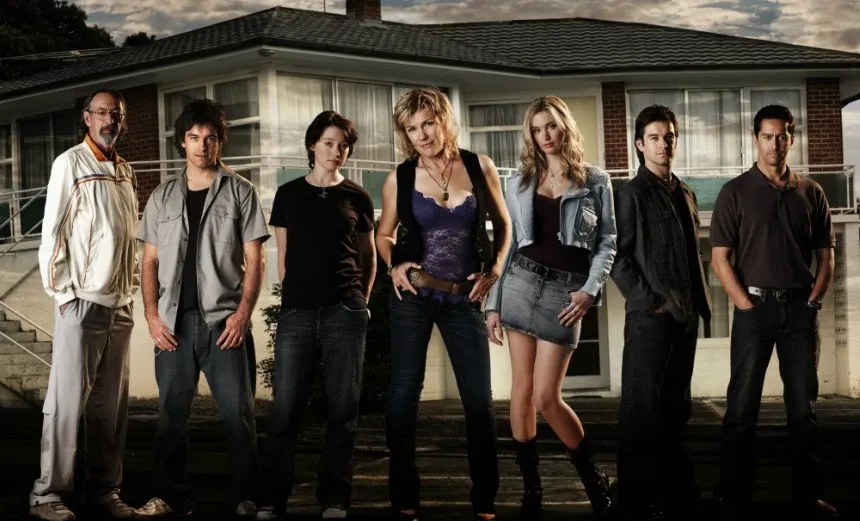
- Rewatching Outrageous Fortune. I watched this when it originally aired, between 2005 and 2010, but definitely missed at least half of the episodes (ah, the beauty of once-a-week live TV. A simpler time.) Fuck it's good on a rewatch.
Where to find me
- I'll be at the Local Government Professionals WA State Conference in Perth this year (and taking Harriet with me to see some quokkas on Rottnest Island, eee.) The theme is "All hands on deck" so the Australians will probably spend the whole time giggling at my accent. If you're in WA, come heckle me.
- Check out this episode of PowHer, where I chatted with host Jess Stuart about the skills we need in an AI world and the structural barriers facing women in leadership.
The magic of magnesium

I just had my first float in a salty float pod. I'm still a bit crusty (a thorough shower and hair wash is needed post-float, team) but I loved it. Time disappears, all is dark, and it's just you and your thoughts suspended in a watery coffin. Ahhhh. WTF is it with magnesium? It's magic. Drink it. Swallow it. Lie in it. Be it. You are magnesium now.
Man, I appreciate you guys
Made it to the end? Holy shit! How good are you.
If you're a paid member, thank you so much for being here. You've proven this model and made it worth investing in. It's been 3 years since I branched out from work-adjacent-content and launched a paid tier. I've spent countless hours learning, levelling up, and nailing my voice since then and it's thanks to your support I feel ready to take the next step. Lessgo.