 Think for yourself
 See more clearly
 Make better decisions
 Live on your own terms
 Speaking
 Training

Friday Flurry is a newsletter for paid subscribers.
In this edition, we explore stories that assign blame and distribute power and consider our ability to shift things.
Here's what one member, Sara, recently said about it:
"Alicia’s newsletter is one of those rare reads that stays with you long after you’ve finished it. She has an incredible ability to balance sharp wit with thoughtful challenge, making even the most uncomfortable or avoided topics feel accessible and worth engaging with.
What I value most is how she invites you to reconsider your perspective—never in a heavy-handed way, but through insight, curiosity, and a genuine respect for the reader. It’s not just a newsletter you read; it’s one that nudges you to think differently about the conversations we all need to be having every day."
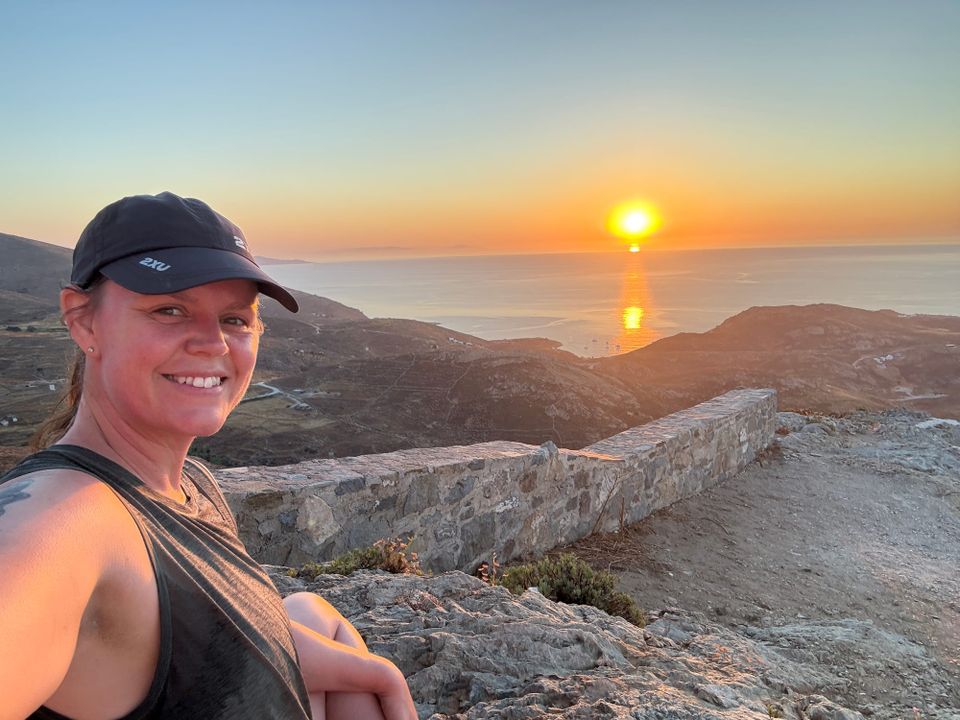
I love to watch the sunrise when I travel. It feels sneaky and rebellious, seeing a place untouched before the world rises for the day. When I visited the Greek island of Serifos, I rose before dawn and spent an hour climbing to the Castle of Chora, the island’s highest point. Salty air filling my lungs, sunscreen sweating into my eyes, I plowed up an endless track until I reached the castle - really a collection of stone buildings, encircled by ancient walls.
The story of Serifos
The Castle is a fortified village, built in the 1430s by Venetian lords known as terzieri. Even in the half-light, the village felt watchful and slightly uneasy. After the Byzantine Empire fell in the early 1200s, Venetian families ruled the island with an iron fist (and an iron mine!) until the Ottomans moved in around 1566. It was a tough time for Serifos’ locals. The lords were harsh, and prone to inter-family conflict, and conditions in the island’s iron mines were brutal. Serifos had been doing it tough for a while by then. During the Roman imperial period, Serifos was a place of exile, somewhere the empire sent people it didn’t want to deal with.
I didn’t go to Serifos in exile, or for its architectural or economic history. I went for Medusa.
OG victim blaming
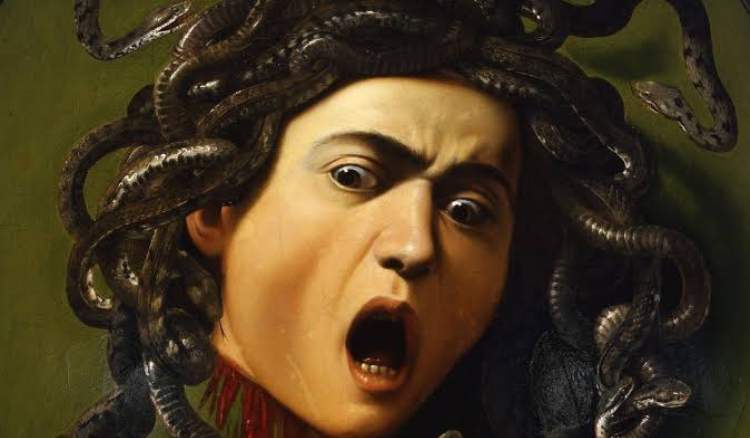
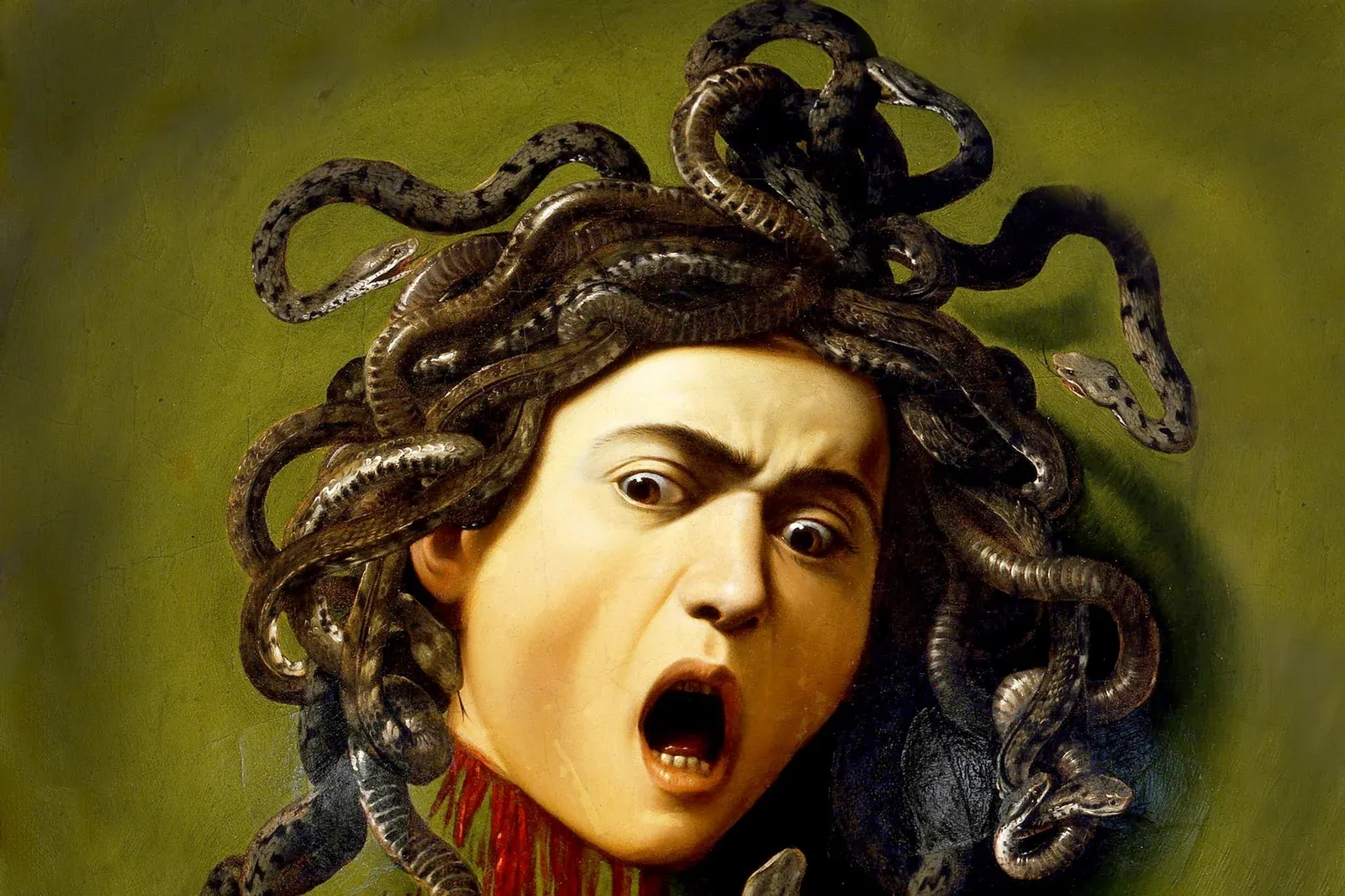
Medusa was a Gorgon in Greek mythology. You’ve probably heard of her: wild snake hair, a powerful gaze that turned people to stone. Angry gal. For hundreds of years, people have put Medusa on the front of their boats as a shield. She has come to symbolise power and protection, because according to maritime logic, she’s so ugly she keeps the evil away.
But Medusa wasn’t always ugly. She was once a beautiful young maiden; a priestess of Athena, committed to a life of chastity. That is, until Poseidon, god of the sea, got a look at her and had his way with her in Athena’s temple.
When Athena found out the holy vibes of her chaste temple had been compromised, she was furious. At Poseidon? No. Athena punished Medusa by turning her into a monster, installing the stone-turning glare and banishing her.
Not satisfied, Athena later eggs on the demigod Perseus, son of Zeus and slayer of monsters, to kill Medusa, equipping him with a shield and a mirror to avoid stony transformation. Perseus takes the bait and chops Medusa’s head off, bringing it to the island to Serifos to show it off and use it for protection.
Medusa isn’t a monster story. It's a story about how we reframe reality and turn women into demons instead of holding men accountable for their behaviour.